A Hot First Half Cools as Supply Shocks Bite
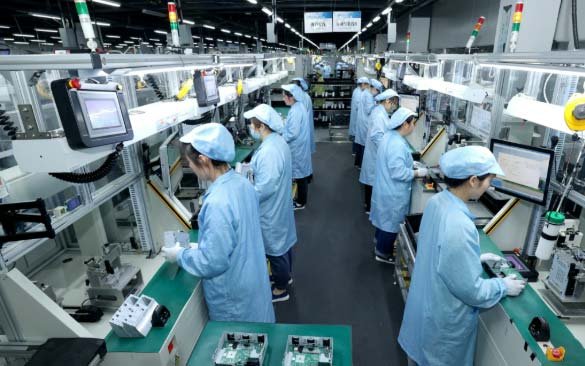
After a blistering start to 2021, China’s industrial profit growth began to lose momentum as a combination of COVID-19 flare-ups, severe flooding, and rising input costs disrupted factory operations. The slowdown followed a period of strong year-on-year gains that had been amplified by a low comparison base from the pandemic’s first year.
Rather than signaling an outright contraction, the data pointed to a normalization phase—a cooling from unsustainably high growth rates as the industrial sector adjusted to fresh challenges in logistics, energy supply, and raw material availability.
From Boom to Balance
China’s early-2021 industrial rebound was driven by a global surge in demand for goods, infrastructure expansion, and robust export orders. But as domestic outbreaks triggered localized lockdowns and flooding hit key production hubs in Henan and other provinces, factory output and shipments began to stall.
Meanwhile, higher prices for commodities like steel, coal, and copper boosted upstream producers but squeezed downstream manufacturers, who struggled to pass on cost increases to consumers. The result was growing profit dispersion across sectors—with resource-heavy industries outperforming while consumer and equipment makers faced margin pressure.
Reading the Broader Signals
For investors and analysts, the key takeaway was that China’s recovery was becoming less synchronized. Industrial profits no longer moved in lockstep across sectors; instead, performance hinged on exposure to global demand cycles and input-price sensitivity.
This divergence coincided with policy shifts—Beijing began to fine-tune credit conditions and infrastructure spending to balance growth without fueling asset bubbles or inflation. At the same time, persistent property-sector weakness and energy rationing added friction to the broader industrial landscape.
Longer-Term Perspective
Looking beyond 2021, the trend foreshadowed China’s later challenges with deflationary pressures and overcapacity. As competition intensified in autos, electronics, and renewable equipment, prices began to fall faster than costs—eroding profitability even in industries once considered safe.
That evolution—from a short-term cooling driven by floods and virus controls to a structural squeeze driven by price wars and weak demand—shows how cyclical shocks can expose deeper inefficiencies in China’s industrial model.
For portfolio watchers, tracking indicators like PMI readings, profit margins by sector, and producer price inflation remains essential to understanding how China’s factories adapt to an increasingly volatile global environment.