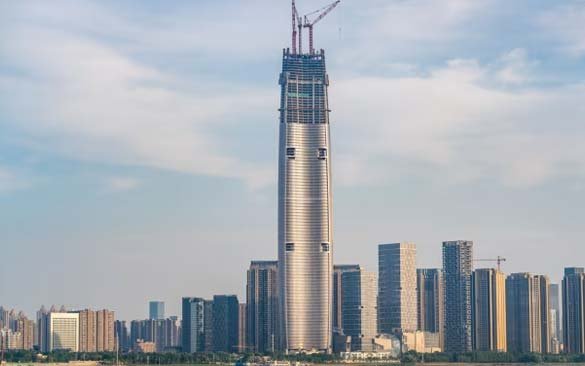
Construction slowdown mirrors broader property and debt pressures.
China completed nearly 40% fewer skyscrapers in 2021 compared to the previous year, according to a report by the Council on Tall Buildings and Urban Habitat (CTBUH). The decline marks one of the sharpest slowdowns in the country’s decades-long high-rise boom — a symbolic indicator of the real estate cooling and tighter credit environment rippling through its economy.
The Numbers Behind the Drop
-
Only 56 buildings taller than 200 meters were completed in 2021, down from 88 in 2020.
-
This is the lowest figure since 2013, a striking reversal for the country that once built more tall towers than the rest of the world combined.
-
Globally, completions fell about 20%, but China’s outsized decline underscores its unique economic transition.
What’s Driving the Slowdown
-
Property developer distress: The Evergrande crisis and broader deleveraging campaign have choked off funding for large-scale projects.
-
Regulatory tightening: New rules to curb speculative building and improve urban efficiency have slowed project approvals.
-
Shift in priorities: Local governments are focusing on affordable housing, infrastructure renewal, and sustainability, not prestige towers.
Global Ripple Effects
China’s skyscraper slowdown has implications for:
-
Steel and cement demand, which feed into global commodity prices.
-
Architectural and engineering firms that relied on Chinese mega-projects.
-
Urban policy debates about density, livability, and economic symbolism.
The decline also mirrors a broader property market correction, as Beijing aims to deflate real estate risks without triggering systemic instability.
Symbol of an Economic Shift
China’s era of rapid vertical expansion is giving way to measured, efficiency-driven urban growth. The government’s emphasis on financial prudence, carbon neutrality, and population realities suggests the age of relentless skyscraper one-upmanship may be ending — replaced by a focus on resilience over record-setting.